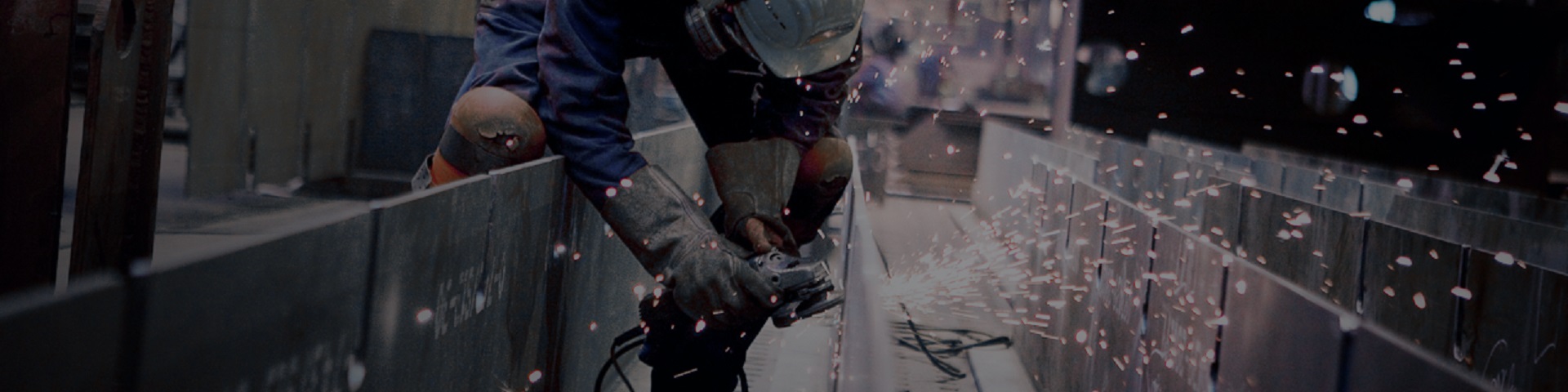
MIG-welding has now become an established joining process in many industries. It is used increasingly often, particularly in vehicle repair and restoration, as well as in the construction of control cabinets, ventilation systems, and air conditioning units. In other words, whenever galvanized or coated thin sheets or even high-strength steel sheets need to be joined with minimal heat input. The material is not melted here; rather, a brazed joint is created between the workpieces.
Perfectly matched sheet metal is therefore a prerequisite, and keeping the gap as small as possible makes the work much easier. Using a cutting disc with a maximum thickness of 1 mm—preferably 0.8 mm—greatly simplifies the work later on during automotive repairs.
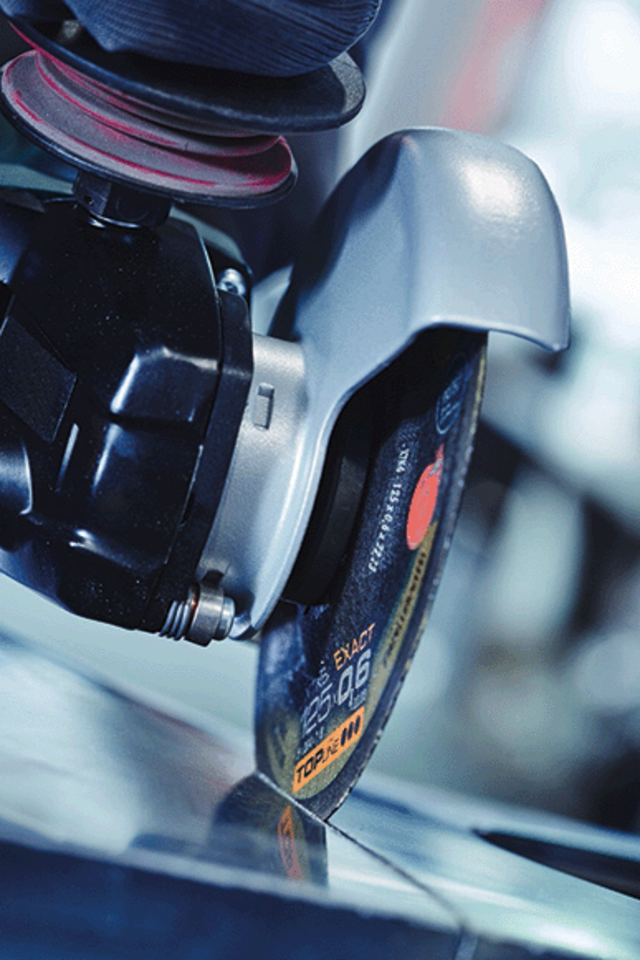
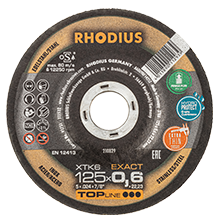
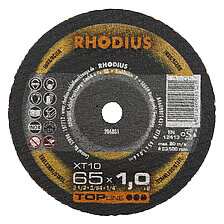
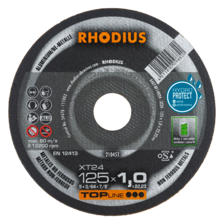
Extra-thin cutting discs from RHODIUS in diameters 115 and 125 are extremely thin, ranging from 1.0 mm to an unrivaled 0.6 mm disc thickness.
They enable virtually burr-free sheet metal processing, for example when cutting out mudguards. They also impress with minimal flying sparks and a particularly cool cut.
This cool cut is the be-all and end-all, as the (painted) sheet metal undergoes almost no thermal changes in the cutting edge zone. The material distortion is minimal. A narrow, clean cut and high lateral stability ensure precise work with minimum effort.
Further decisive advantages for MIG-welding. New sheet metal can be optimally fitted. The solder wire only has to close a small gap. The gap remains small and the distances even. The required very good joint strength can be achieved.
At RHODIUS, cutting discs with a diameter of 115 mm and 125 mm in the extra-thin version bear the product abbreviation XT. With a maximum disc width of 1.5 mm, they are the ideal tool for processing thin-walled materials as well as solid material.